


















Olive Tree Pruning
Its importance in production and plant health
The olive tree (Olea europaea) is one of the most important cultivated trees in the Mediterranean, especially in Greece, where it is linked to the country's agricultural, economic, and cultural identity.
The success of olive cultivation depends on many factors: climate, variety, soil, nutrition, irrigation, plant protection, and, of course, pruning.
Pruning is a key part of cultivation, as it determines the balance between vegetation and fruiting, affects the tree's physiological processes, and contributes to the longevity of the olive grove.
The role of pruning in tree physiology:
The olive tree is an evergreen, long-lived tree with a natural tendency to form a dense canopy. If this canopy is not controlled and reduced, it leads to shading of the inner part, resulting in reduced photosynthetic activity and, consequently, reduced production.
Pruning has a direct effect on the physiological functions of the olive tree:
1. It regulates the ratio of leaves to woody tissue to fruit-bearing shoots, maintaining a balance between vegetation and fruiting.
2. It allows for better lighting and ventilation of the canopy.
3. It renews the fruit-bearing shoots and other fruiting organs.
4. Shapes the structure of the tree.
Types and objectives of pruning:
Depending on the stage of development and the purpose, olive tree pruning can be divided into three basic categories:
A. Formative pruning: This is carried out in the first few years after planting, with the aim of creating the tree's framework.
The goal is to form a stable and balanced trunk, with 3-4 main branches in the correct positions and angles, to ensure good lighting and ventilation. The most common shape in Greek olive groves is the cup (free or open).
B. Fruit pruning: The most important type of pruning, applied to trees that are in full production.
The purpose of fruit pruning is to regulate vegetation and fruiting (avoiding biennial bearing), to renew fruit-bearing shoots, and to ensure uniform distribution of fruit on the tree.
Olive trees tend to bear fruit every other year (alternate bearing). Pruning helps reduce excessive production in one year, promoting the growth of new shoots and, consequently, production in the following year.
C. Renewal pruning: This concerns old or neglected trees that have not been pruned for a number of years. This pruning is severe and removes a large part of the old wood of the tree so that the plant is stimulated and sprouts again. This renewal must be done gradually, over 2-3 consecutive years, so as not to stress the tree.
Time period and pruning techniques
Olive trees are pruned after the end of the harvest, when the frosts are over and before the intense vegetation begins, i.e. from late February to mid-April, depending on the region. In mountainous or cold areas, it is preferable to delay slightly to avoid damage to young tissues from the cold.
The basic principle is to remove dry, weak, internal, and unnecessary shoots, while maintaining the natural shape of the tree. Cuts should be clean and close to the branch. For large cuts, it is recommended to apply healing paste or Bordeaux mixture to prevent infection by pathogens.
Effect of pruning on harvest and olive oil quality
The shape and density of the canopy resulting from pruning significantly affect the harvesting process and its ease, the quality of the fruit, and, consequently, the quality of the olive oil produced.
Research has shown that olives from properly pruned trees have a higher content of phenolic compounds, lower acidity, and a better organoleptic profile in the olive oil produced.
Tools and safety in pruning
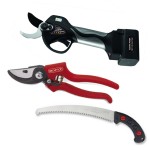
Proper pruning depends not only on knowledge and experience, but also on the tools. At Interpower Kydonakis, we have been helping you make the right choice in pruning tools for over 45 years, based on our experience and the best possible results for your crops.
See HERE our wide range of pruning shears, hand and battery-powered, as well as battery-powered.
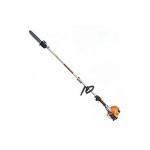
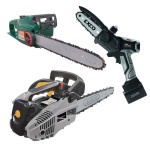
See HERE all chainsaws, petrol and battery-powered, as well as battery-powered pole saws.
Related Products
Availability: AVAILABLE
Availability: AVAILABLE
Availability: AVAILABLE
Availability: AVAILABLE
Availability: AVAILABLE